In tropical coffee agroforests, a diverse ant community can occur across multiple vertical strata, yet the extent to which dominant species influence these patterns remains unclear. In this study, “A keystone ant species (Hymenoptera: Formicidae) drives patterns of arboreal ant diversity in the canopy of a tropical coffee agroforest” by Stephanie Coronado and colleagues, the authors examined arboreal ant assemblages on shade trees with and without nests of the aggressive ant Azteca sericeasur. They found that ant richness and abundance increased from the lower canopy toward higher strata, indicating stronger competition in upper canopy habitats. The presence of Azteca modified these vertical patterns by monopolizing resources and increasing community segregation. Because Azteca workers foraged throughout the entire tree, their influence extended across all sampled strata. Rather than affecting only specific canopy layers, Azteca reduced species richness consistently throughout the tree and altered overall community composition. Consequently, trees with Azteca nests differed more strongly from other trees, increasing species turnover and horizontal heterogeneity within the agroforest sites. These findings demonstrate that a keystone ant species can shape both vertical stratification and landscape-scale canopy diversity patterns.
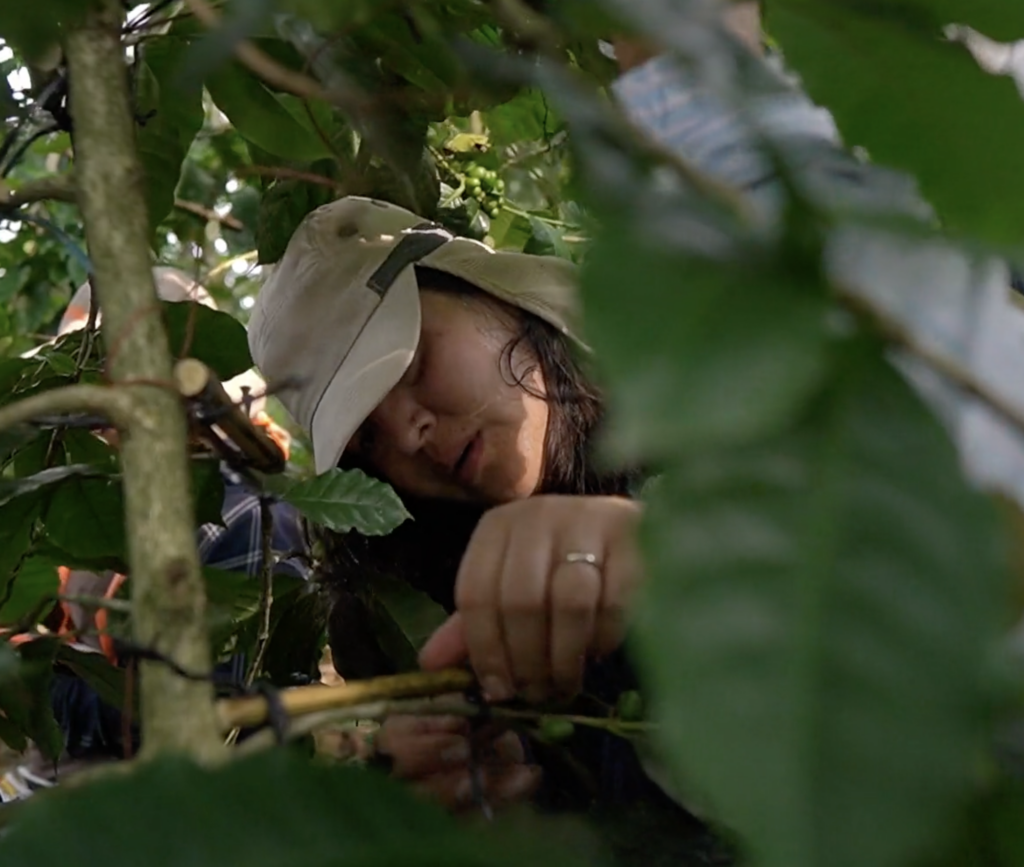
Studying arboreal ant ecology requires creative methods. Here, Estelí Jiménez-Soto is installing artificial nests made of bamboo on a coffee plant to study ant colonization and community assembly. Although artificial nests were not used in this study, the photo captures the type of methods that help us better understand the ecology of tropical ant communities. Image credit: Manuel Antonio Jimenez Soto
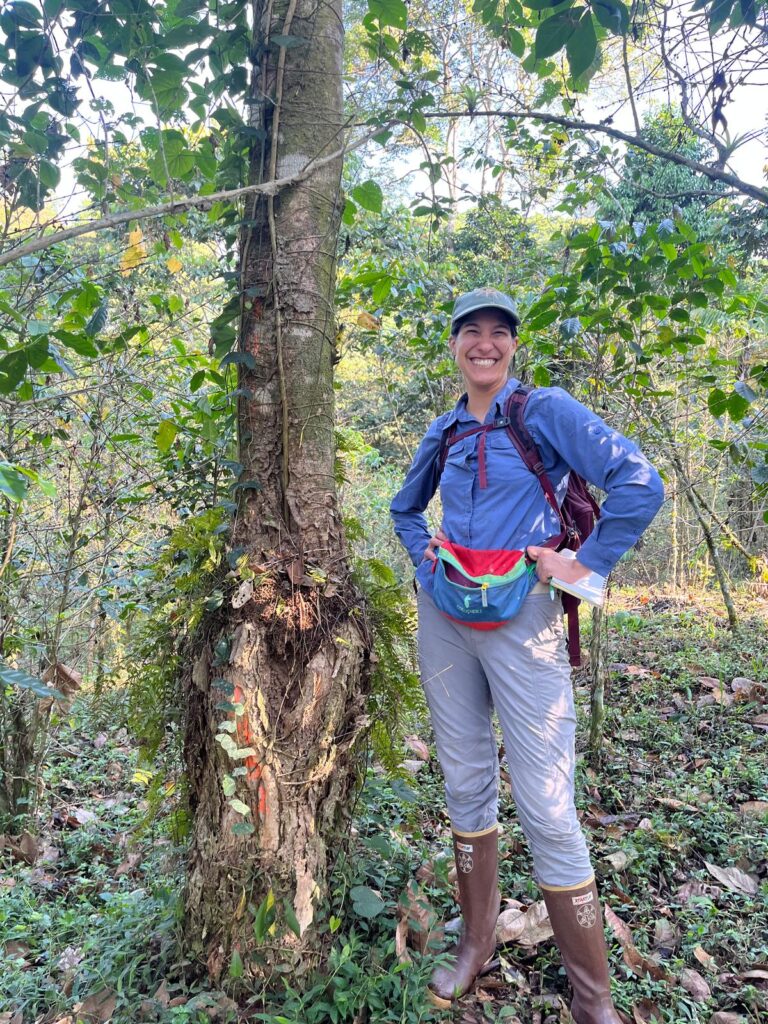
Dr. Stephanie Coronado conducts fieldwork in a shaded coffee agroecosystem. Her work contributes to our understanding of the factors that drive ant community dynamics and species interactions in tropical coffee agroforests. Credit: Roman Lopez Muñoz
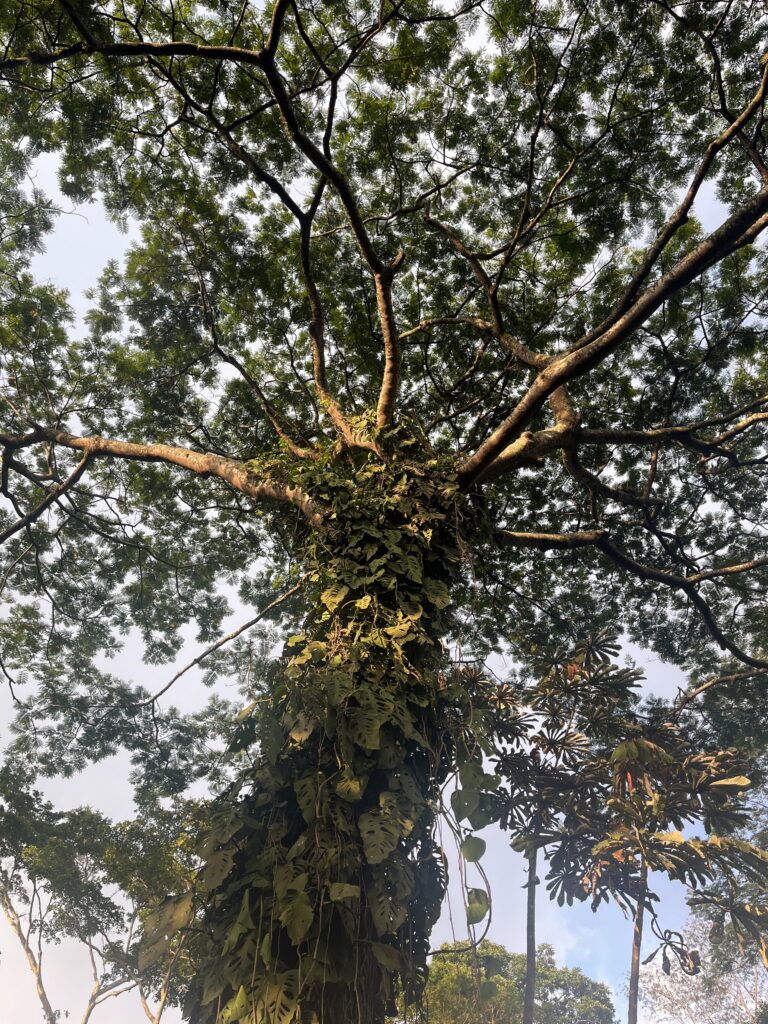
1. Towering above the canopy, the tree Schizolobium spp. (commonly known in Central America as “Zope”) offers habitat for a rich community of arboreal ants in coffee agroforests. By sampling these trees, we explored how the presence of Aztecasericeasur colonies shapes ant diversity in the forest canopy. Image credit: Stephanie Coronado.
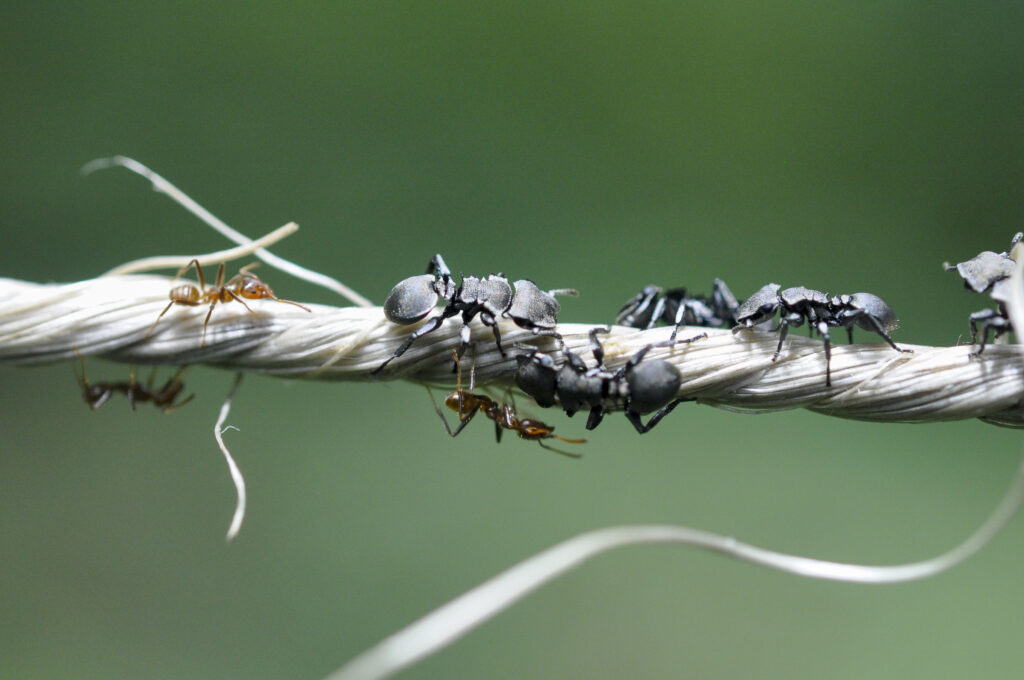
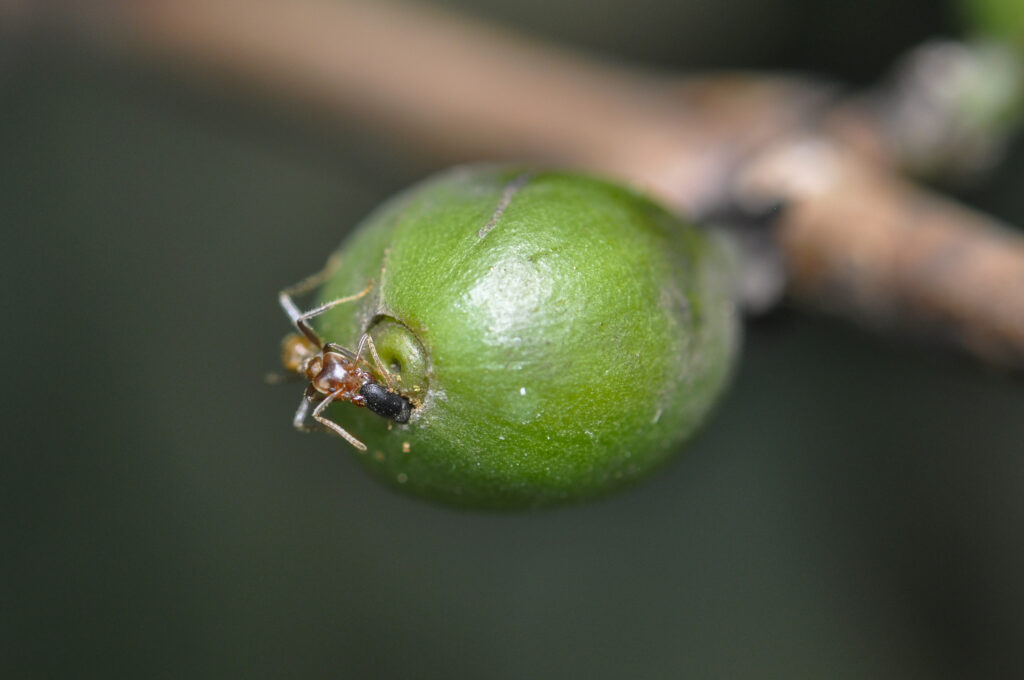
2. Azteca sericeasur is a keystone species in our study system. We documented that A. sericeasur drives patterns of species turnover among trees, increasing horizontal heterogeneity in the arboreal ant community. This image shows Cephalotes basalis using A. sericeasur trails, a behavior we documented in a previous study demonstrating how canopy connectivity enhances ant activity and ant-mediated pest control. Credit: Jonathan Morris
3. An Azteca sericeasur worker captures an adult beetle of the coffee berry borer (Hypothenemus hampei), coffee’s most destructive insect pest. By preying on coffee berry borers and other herbivorous insects, A. sericeasur provides an important ecosystem service, contributing to natural pest control in shaded coffee agroecosystems. Credit: Jonathan Morris
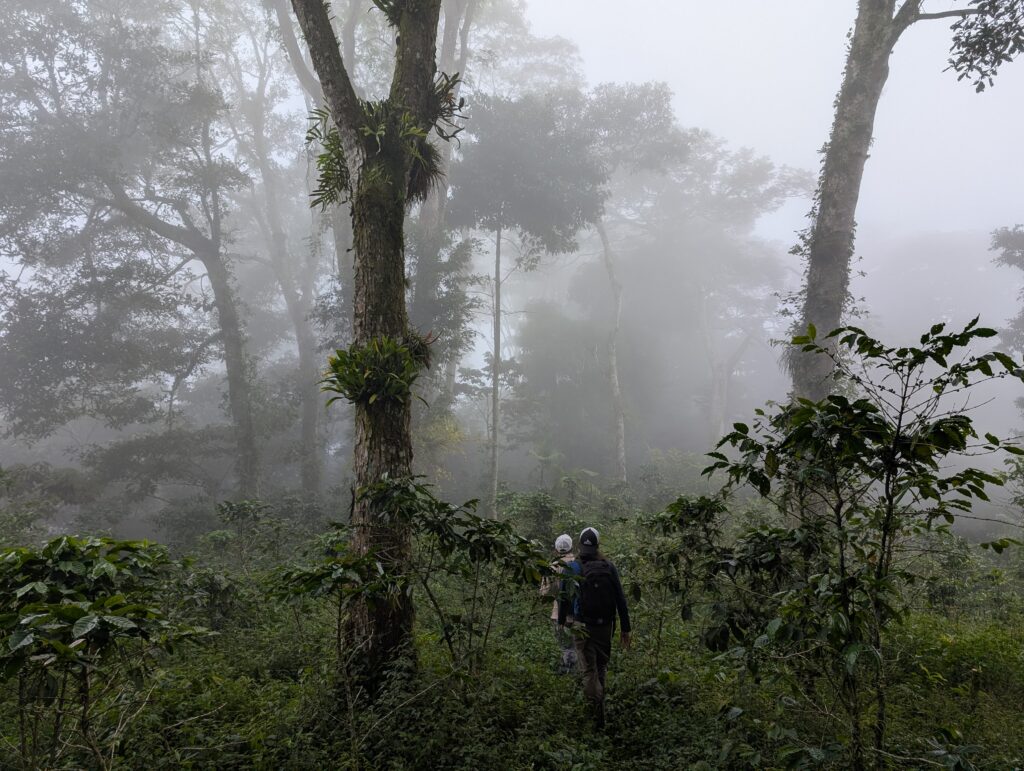
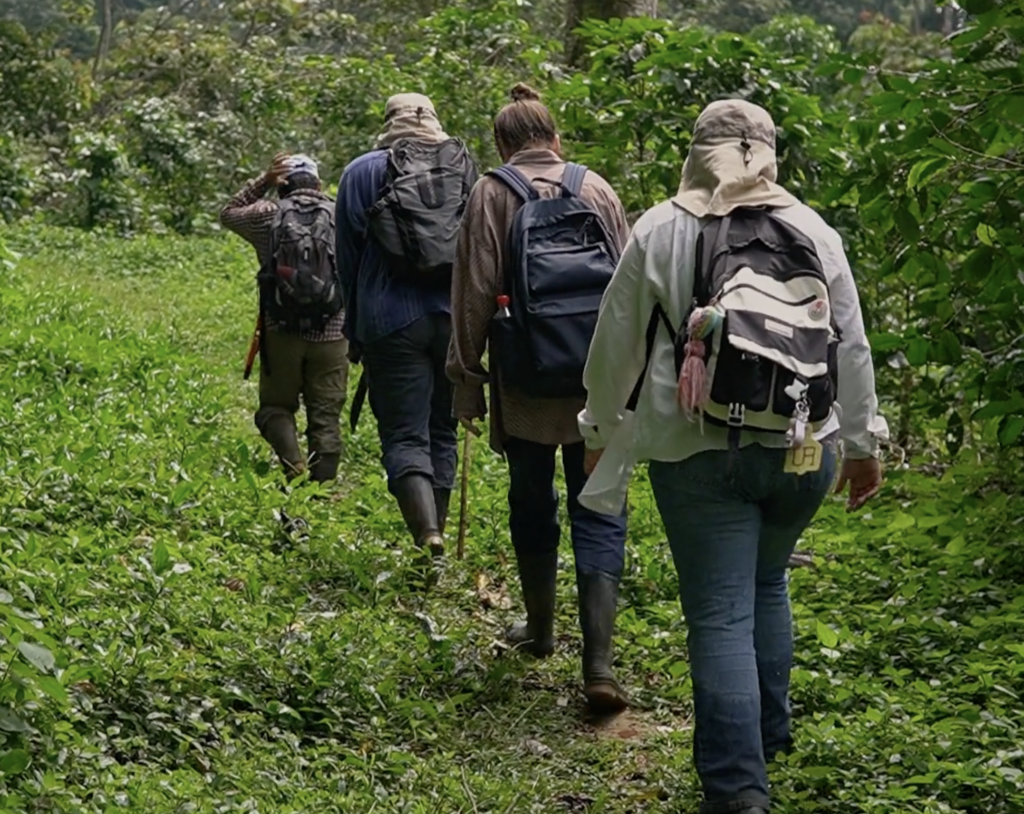
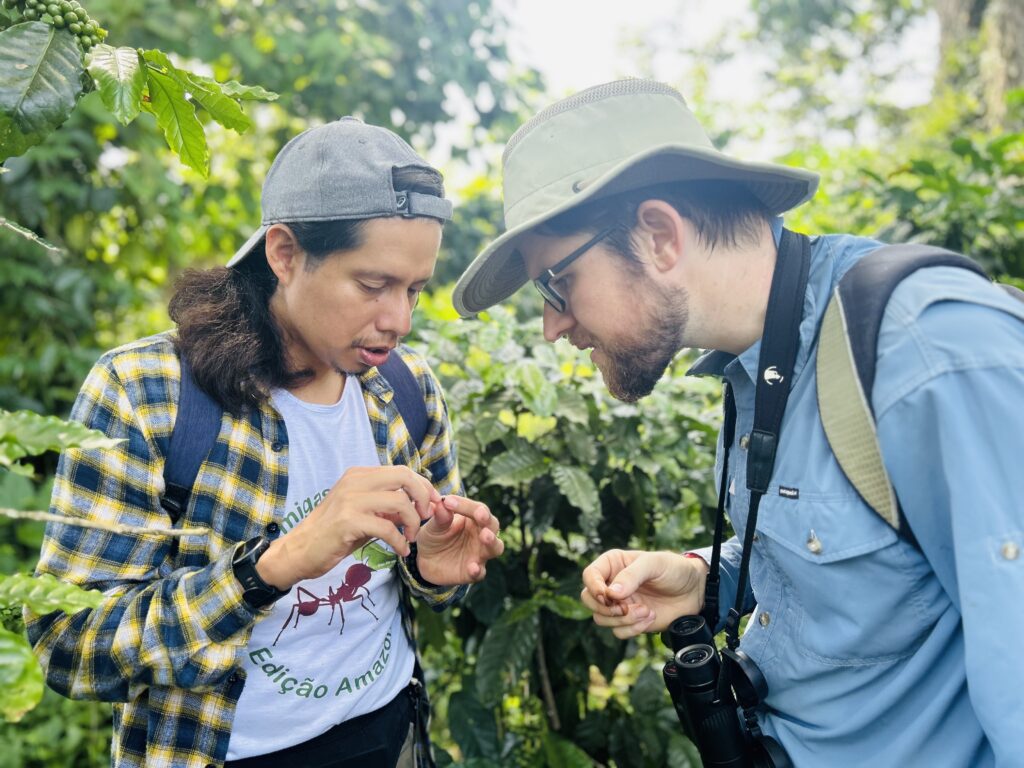
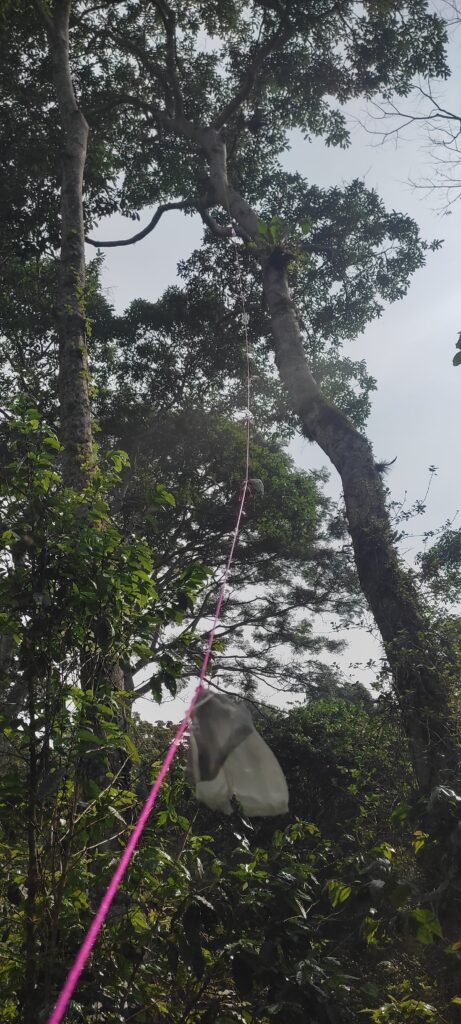
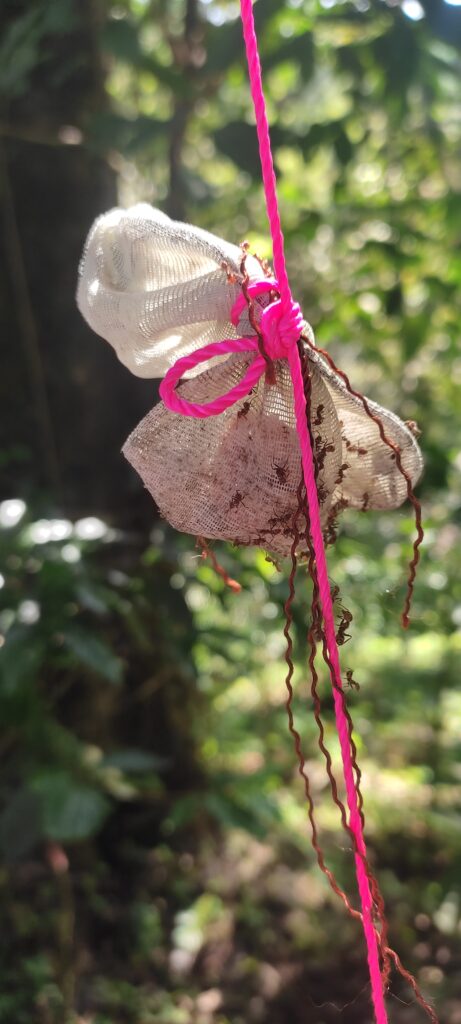
45On a foggy morning in a shaded coffee agroecosystem, researchers Román López Muñoz, Stephanie Coronado, and Gabriel Dominguez walk into the forested coffee plantation in search of sampling sites (Left). Image credit: Stephanie Coronado. On the right, Dr. Estelí Jiménez-Soto and students follow a forest trail towards the day’s field sites in tropical coffee agroecosystems. Right image credit: Manuel Jimenez Soto.6. Román López Muñoz and Dr. Jonathan Morris examine an ant specimen in the field before it is taken to the laboratory for mounting and further identification. Preliminary observations of live specimens—including their color, behavior, and other field characteristics—provide valuable notes that aid accurate identification once the specimens have been preserved. Credit: Estelí Jiménez-Soto789Román López Muñoz prepares an arboreal bait line using a forestry slingshot (7) to position tuna baits at multiple heights within the tree canopy (8). Image 9 shows A. sericeasur using the tuna baits placed on trees. This rapid sampling method, developed by Leponce and colleagues (2021), provides an efficient way to assess canopy ant diversity without the need for cranes or tree climbing, making it well suited for ecological studies in tall tropical forests and shaded coffee agroecosystems. Credit: Estelí Jiménez-Soto and Román López Muñoz
Myrmecological News Blog is an international, non-profit, independent ant blog devoted to myrmecology and related fields.
It offers various contributions on all fields of ant research, in a lively mix of short posts on journal articles, (flash) interviews with researchers, photoblog contributions, views and reviews, book reviews, etc.










Recent Comments