Do nonnative ants change the size-complexity relationships? An interview with Leo Ohyama
The size-complexity hypothesis predicts that the larger an organism, the more complex it becomes, for instance, by producing more types of cells. This holds true for a large variety of organisms from single-celled organisms to vertebrates. Workers in a social insect colony can be understood as “cells” of a larger organism (their colony): according to the hypothesis, a larger colony becomes more complex in its social organization, for instance, through greater queen-worker dimorphism. So far, this hypothesis has largely been studied in evolutionary biology rather than in ecological contexts. But what happens to social complexity of ant communities if nonnative ant species enter the picture; do they show the same complexity relationship as native ant species? In this interview, lead author Leo Ohyama discusses his newest research in Myrmecological News, “Size-complexity relationships of ant (Hymenoptera: Formicidae) assemblages across an invaded region: a conceptual framework for sociometric trait analysis of eusocial insect invasions“, on the size-complexity relationship in ant communities across Florida.
An interview with Leo Ohyama

Edited by Phil Hoenle and Salvatore Brunetti

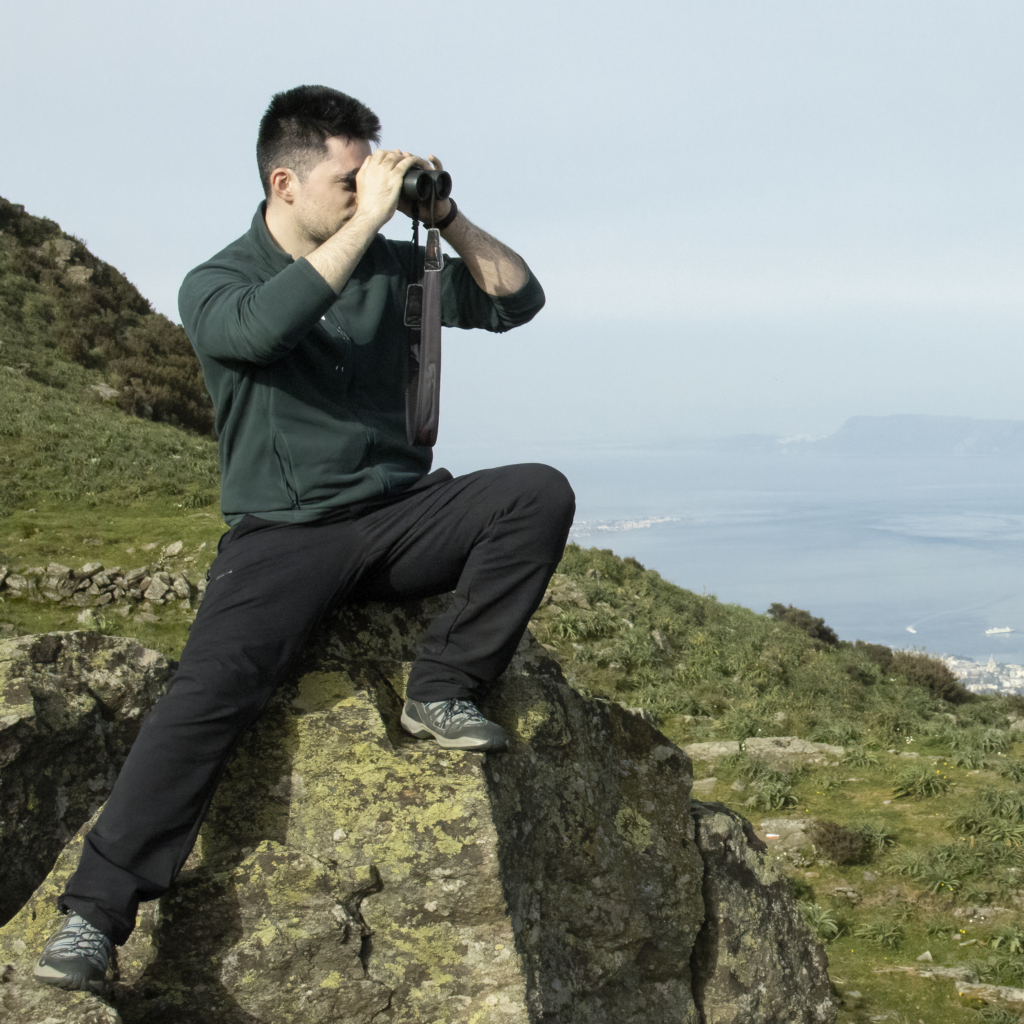
MNB: Could you tell us a bit about yourself?
LO: I am currently a data scientist at the University of Florida where I assess the impacts of a reading intervention program for public school children across the state of Florida. Prior to that I was a post doc doing research on trait ecology (primarily with ants). On the side, I develop machine learning pipelines to track and forecast pricing for alternative assets, specifically within trading card economies.
MNB: Could you briefly outline your research on “Size-complexity relationships of ant (Hymenoptera: Formicidae) assemblages across an invaded region: a conceptual framework for sociometric trait analysis of eusocial insect invasions” in layperson’s terms?
LO: A basic rule in biology is that size often scales with complexity. This can mean structural complexity or social complexity—much like how a human city with a larger population naturally develops more complex government and architecture.
Social complexity is fascinating but historically hard to measure in animals due to limited data. Ants are the perfect organism for studying this because they vary wildly in both size (the number of workers in a colony) and social structure.
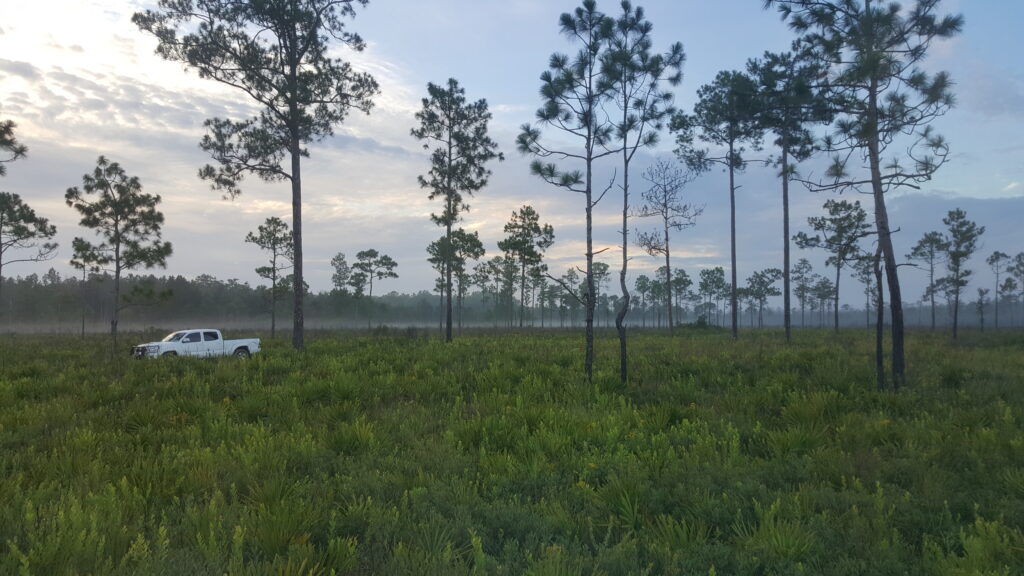
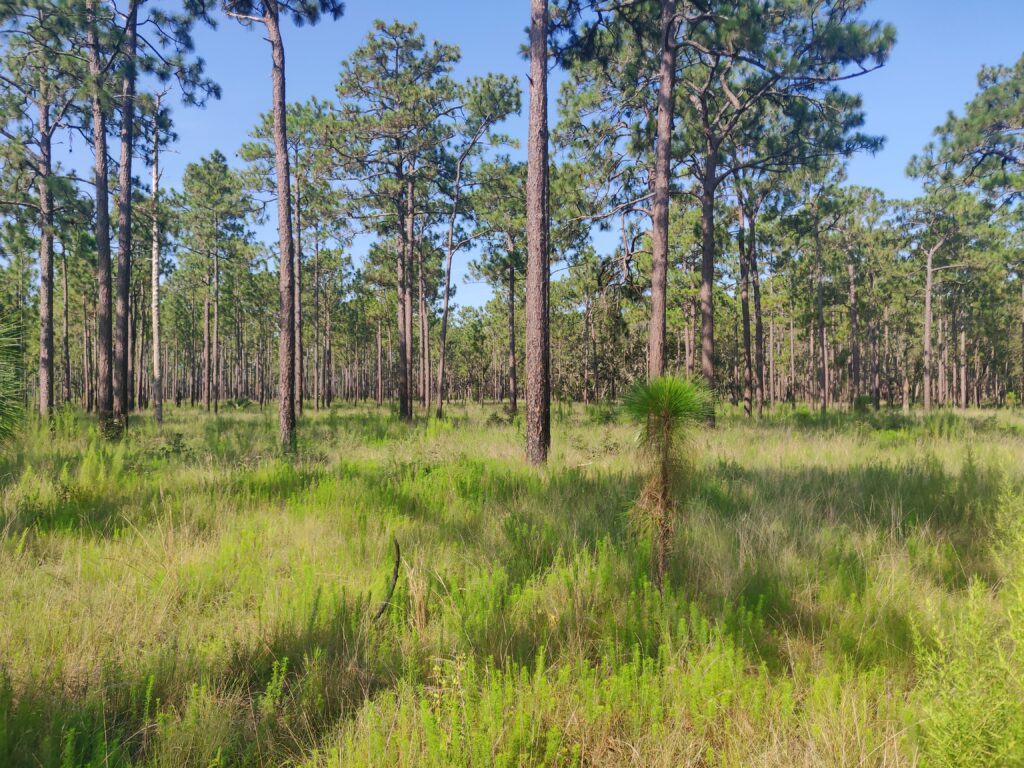
Our research asks a question: what happens to this size-complexity relationship when an invasive, nonnative ant species enters the community? Because different invasive ants have completely different social profiles, the disruptions can vary. To map out these potential outcomes, we used a modelling approach to analyse ant communities across the state of Florida (a non-native ant hotspot).
MNB: What is the take-home message of your work?
LO: Nonnative ants alter the size-complexity relationships in ant communities in a predictive manner that reflects their traits. There’s potential to further apply this framework towards a more cohesive approach for sociometric trait analyses with eusocial organisms. One example I can think of is implementing this framework to better assess which areas of the planet may be most susceptible to nonnative ants.
MNB: What was your motivation for this study?
LO: There were several:
1. Reading Bonner (2004) sparked my interest in size-complexity relationships as I was already thinking about the relationship between city sizes and human complexity within those cities.
2. When this project was still in its infancy most of the trait ecology work with ants was still very worker focused and I wanted to start incorporating more components of an ant colony (e.g. queens, colony size).
3. I wanted to do some cool and fun science with good people.
MNB: What was the biggest obstacle you had to overcome in this project?
LO: To be honest, the peer-review process combined with my shift in career focus. This paper was rejected at two other journals under circumstances that I did not see as fair (welcome to academia, right?). At the same time, I was transitioning from conducting research on ants to a new field of childhood literacy and education assessments (item-response theory etc.). There was a point where I had let this paper just sit on the hard drive. But my co-author, Joshua King, came in and helped me get it submitted and over the finish line at Myrmecological News (Thanks Josh!).
MNB: Do you have any tips for others who are interested in doing related research?
LO:
1. Work with a good group of co-authors and collaborators who want to see you succeed and actually contribute to the work (my co-authors were the most positive and forward-looking people, and I can’t thank them enough!).
2. Data and models are great but ground your work in a scientific story that is interesting (especially for you). There will always be criticism (some fair, some not) on model choice, data limitations, and what not. Don’t pigeonhole yourself into being overly reliant on methods. You don’t want to be someone’s data analyst, you want to be the storyteller, and this can sometimes get murky in trait-based research.
3. The best ideas come when you’re not working, so take more breaks and go travelling and learn about something that is not ant related.
4. Remember that data like worker counts, head width etc., are just point estimates along a distribution of values and that this distribution varies over time and space. You’re already starting from a disadvantage, so be kind to yourself.
MNB: Where do you see the future for this particular field of ant research?
LO: More data will become available across all forms (geospatial, phylogenetic, traits etc.) in ant trait ecology. At that point, the data hurdle won’t be an issue. I predict we will see more papers with fancy data analysed at large scales. While these contributions will be important, to me, that’s not an exciting part of this field of research.
We have done so many empirical and associative studies on ant traits but there needs to be a renewed focus on mechanistic understanding of those associations. Don’t get me wrong, I love coding and running fancy statistical/ML models and looking at larger scales but sometimes you just need to go out there and look at ants.
To me, the most impactful work to come of ant trait ecology will be the experiments, the field work, and the natural history. We posit how morphological traits impact fitness, ecosystem services etc. but what’s going to drive this field forward is being able to put a value on this.
I know there are people working on this and I have the utmost confidence in them. I look forward to seeing how the future takes shape from the sidelines (for now…).
Sources:
Bonner, J.T. (2004), PERSPECTIVE: THE SIZE-COMPLEXITY RULE. Evolution, 58: 1883-1890. https://doi.org/10.1111/j.0014-3820.2004.tb00476.x






Recent Comments