Cloning the competition: Jonathan Romiguier on the bizarre world of Messor harvester ants
In a groundbreaking study, “One mother for two species via obligate cross-species cloning in ants”, Jonathan Romiguier – an evolutionary biologist at the University of Montpellier – and his colleagues are redefining our understanding of how social insects can reproduce to achieve their complex social structures. Romiguier’s career has been driven by a deep-seated curiosity about the complexities of life and long-standing love for ant research, recently leading to his current fascination with the “evolutionary marvels” of Messor harvester ants. Jonathan Romiguier and colleagues recently discovered xenoparity: a bizarre phenomenon where queens of one species clone males of another species to produce a worker caste, which challenges the traditional boundaries of genetics.
An interview by Jonathan Romiguier

Edit by Olena Kolumba and Salvatore Brunetti
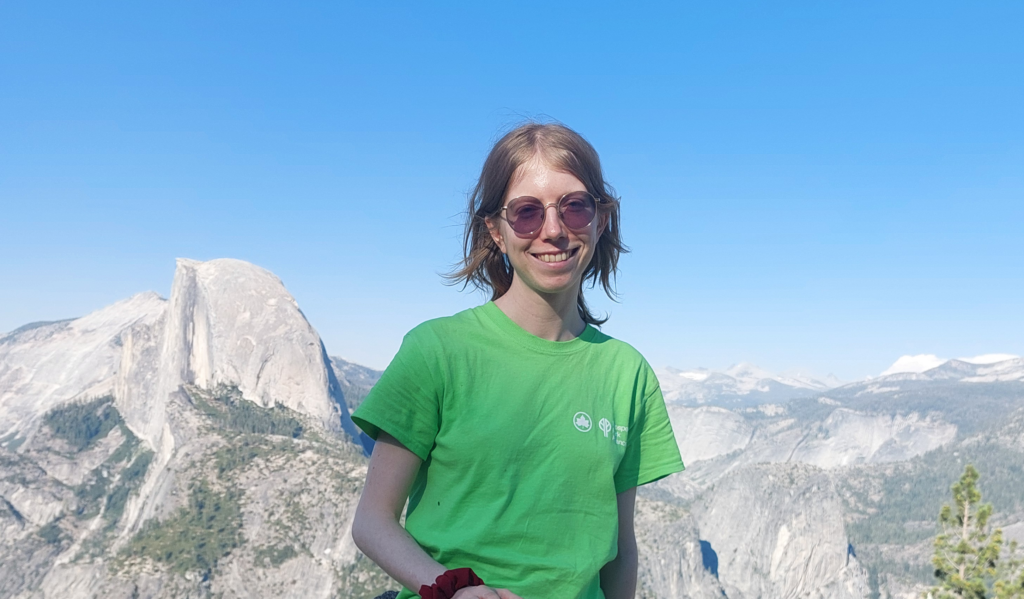

MNB: Could you tell us a bit about yourself?
JR: I am a researcher in evolutionary biology at the University of Montpellier, France.
MNB: Could you tell us about your research?
JR: I began my research in 2010 by studying the genome evolution of mammals and animals in general, then switched to ant genomics in 2014. Today, I mostly research the reproductive system of Messor harvester ants, which involves queens parasitizing sperm from other species to produce their worker caste (also known as “social hybridogenesis”). More recently, we discovered xenoparity – a new reproductive mode in Messor ibericus where queens clone males of another species (Messor structor) as part of their lifecycle. Most of my time is now dedicated to this particular system and Messor harvester ants in general.
MNB: How did you end up studying ants?
JR: Ants and social insects have been one of my top research interests since I took a course on evolutionary biology explaining the superorganism concept and how they constitute a major evolutionary transition in individuality. After having acquired general skills in bioinformatics and molecular evolution during my PhD, more and more ant genomes became publicly available and that was the perfect timing to switch, so I took the opportunity to specialize in ants for my postdoc.
MNB: If you had not become a myrmecologist, what else would you have liked to become?
JR: Outside of ants, I’ve always been fascinated by parasites, and my first year of Master’s was actually in Parasitology. So, I guess, probably an evolutionary biologist specialized in trematodes with complex life cycles, as I was obsessed with them.
MNB: What is your motivation for doing ant research now? What do you enjoy most about ant research?
JR: My main motivation mirrors my long-standing fascination with parasites: ants represent a lifeform that, in some aspects, strikes me as evolutionarily more remarkable than our own species. I feel lucky for the opportunity to rack my brain on these evolutionary marvels instead of human-centric issues. Humanity may have some fascinating aspects, but I am driven to understand other species while there’s still time, as they won’t wait for us to care before they vanish.
MNB: What was the biggest obstacle you had to overcome in ant research?
JR: Finding all castes. My research nearly always involves having not only workers of a species, but also alates (males and gynes), which are way more difficult to sample. This is particularly true for males, which were absolutely necessary to understand the reproductive system of my new favorite species, Messor ibericus.
MNB: Who or what inspired you to pursue a career in myrmecology?
JR: Probably taking care of a colony of Messor barbarus as a hobby in my bedroom when I was a young student.
MNB: What would you do differently if you could start all over again?
JR: If I could start over, I’d likely standardize sample naming and bioinformatics workflows from day one – consistency saves time and reduces friction. But honestly, I’m still chasing the perfect system, so I’d probably still tinker endlessly.
MNB: During your research, what was the scariest moment?
JR: Christmas Eve 2023, when a server crash erased five years of genomic data mid-analysis. I was in the middle of a critical genomic project started five years ago, and the thought of losing everything was absolutely devastating. Fortunately, I managed to recover most of the data and redo analyses, but it was a huge stress and waste of time at the worst possible moment.
MNB: Is there any particular situation in which you typically have the crucial idea for solving a difficult problem?
JR: Typically very late at night, especially when I should already be asleep. My brain just refuses to disconnect and somehow works better than usual during those hours. The downside is chronic insomnia, but I’ve had to accept it: every morning, my brain is barely functional and needs at least 12 hours to return to its peak.
MNB: What are the main differences regarding research when you started as a myrmecologist compared with today?
JR: I started as a myrmecologist ~10 years ago, and honestly I struggle to find qualitative differences with today. Quantitatively, we just have more genomic data, which is very important but not completely different.
MNB: What do you think will be hot topics in ant research in the next ten years?
JR: Not sure, maybe ageing: the fact that a queen can live 10 times longer than a worker despite having the same genome is still crazy to me.
MNB: Do you have any suggestion for myrmecology newbies?
JR: First, find your colony, collaborate early, lean on mentors, and soak up their war stories. Second, hunt the gaps: pick a taxon or question that really motivates you but is not over-studied. The magic happens where curiosity meets empty space: if you’re the first to look, you’re more likely to find something interesting.
MNB: The higher the career level, the fewer women, also in ant research – what do you think will be most important for achieving gender equality in this respect?
JR: It’s a tough issue, especially because our research systems often peak in competitiveness at the very moment many couples are founding families, a critical time including pregnancy that shouldn’t coincide with career make-or-break points. In myrmecology, where fieldwork and long-term projects demand so much, even small changes could help, like flexible funding, shared parental leave, or recognizing collaborative work.
MNB: Does your group harbour students or postdocs with kids?
JR: No, I’m the only one having kid problems.
MNB: What question are you asked most often when people hear you work with ants?
JR: The classical “How can I avoid having these ants in my kitchen?”
MNB: What is the one thing you wish everyone knew about ants?
JR: Ants are very common, but what most people don’t realize is that they represent one of the most extraordinary levels of biological organization, together with other social insects. This is the result of one of the last major evolutionary transitions. The fact that a single genome can produce both a short-lived, nearly sterile worker and a long-lived, hyper-fertile queen is one of the most remarkable evolutionary achievements in the living world. It would be great if everyone understood this, rather than dismissing ants as just small, insignificant insects.
MNB: Do you have a favorite morphological structure / myrmecological phenomenon?
JR: My favorite phenomenon is, without any doubt, xenoparity: the reproductive system we recently uncovered in Messor ibericus.
MNB: Do you have a favorite ant species?
JR: Messor barbarus is my first love, Messor ibericus my new fav.
MNB: In another life, if you could be an ant, what ant species would that be?
JR: Without any doubt a Messor structor male laid by a M. ibericus queen. Living in a multi-species society sounds like an existence worth exploring.
MNB: Which other scientists (or PostDocs, PhD students) would you like to be featured in a Myrmecological News interview?
JR: Without thinking too much: Ehab Abouheif, Adria Leboeuf, Jessica Purcell, Nathalie Stroeymeyt, Corrie Moreau, Daniel Kronauer, Hugo Darras… so many, but I’m sure some already had an interview and that I forget many others.
MNB: What is the one thing you would want to change in science?
JR: Stopping to rely on oral interviews for having a job/grant. Oral communication is riddled with biases linked to gender, physical aspect, maternal language, or origin. In one or two centuries, only our written work will matter, certainly not how smart we were perceived in a 20-minute conversation.
MNB: How can future generations bring a change?
JR: AI could help erase some biases, starting with language. Automated, high-quality translation (both written and oral) may finally end the overwhelming privilege of European and American countries in global discourse. We often underestimate this privilege, forgetting that some of the world’s leading scientific nations operate in maternal languages with entirely different structures and alphabets.
I also hope that oral interviews could one day be conducted through avatars that anonymize an applicant’s gender or physical appearance. While this is more complex to achieve than addressing language barriers, it would be the most effective way to eliminate bias in evaluations and still rely on oral interviews.
MNB: What is the book on your bedside table?
JR: “I Who Have Never Known Men”, Jacqueline Harpan
MNB: Watching sports or doing sports?
JR: Neither.
MNB: Listening to music or playing an instrument?
JR: No.
MNB: Do you enjoy the evening or the morning?
JR: Evening. By very, very far.
MNB: Tea or coffee?
JR: Neither, I prefer water.
MNB: Habit or change, what do you prefer?
JR: Change.
MNB: Cooking yourself or going out having dinner?
JR: Going out having dinner.
MNB: Aspirator or forceps?
JR: My fingers, these are the only tools I’m sure to not forget next to a sampled nest.
MNB: Nest densities or pitfall traps, what do you prefer?
JR: Nest densities.
MNB: Field work or lab?
JR: Lab.
MNB: Pin or ethanol?
JR: Ethanol: I want my ant DNA not too degraded.
MNB: Paper printed out or reading on the laptop?
JR: Laptop.
MNB: Journals financed by the author (open access) or by the reader (subscription based). What do you prefer?
JR: Financed by the author, but ideally, free for both authors and readers.
MNB: Kin selection or group selection?
JR: Kin selection.
MNB: Do you prefer monodomy or supercoloniality?
JR: No strong preferences, but monodomy is easier to study in genetics.
MNB: Do you prefer the workers or the queens in an ant colony?
JR: Queens, because they’re rare. Even more rare, males.







Recent Comments