
More aggressive while invading?
In this interview, Defu Chen describes his recent study, in Myrmecological News, “Changes in the aggressiveness of invasive red imported fre ants towards native ants: perspectives based on diferent latitudes and invasion status“, where, with his coauthors, he examined how the invasive Solenopsis invicta modulates its aggressiveness toward native ant species across latitudinal gradients, invasion contexts and species niche in China.
The main take home message they convey is that aggression is not fixed, but depends on the interacting species identity, geographic origin, and coexistence history. Specifically, aggression resulted higher in newly invaded areas and toward species sharing its nice, while the aggression toward species that oppy a different nice is reduced where they cooccur for longer time.
In this accompanying blog post, Chen emphasizes the broader research context, highlighting logistical challenges in collecting ant colonies and the importance of collaboration. It also reports the author’s motivation and optimism about advancing invasion ecology through interdisciplinary and international cooperation to better understand behavioural adaptation in invasive species.
Edit by Elia Guariento and Salvatore Brunetti


An interview by Defu Chen
MNB: Could you tell us a bit about yourself?
DC: I am a PhD student from China and will soon graduate, focusing on ecology and behaviour related to invasive ants. I have been fascinated by ants since my undergraduate studies in zoology, and this interest has been the main motivation for both my graduate and doctoral research.
MNB: Could you briefly outline your research on “Changes in the aggressiveness of invasive red imported fire ants towards native ants: perspectives based on different latitudes and invasion status” in layperson’s terms?
DC: This study investigates changes in the aggressiveness of the red imported fire ant (Solenopsis invicta) toward two dominant native ant species (Tetramorium bicarinatum and Polyrhachis dives) across different latitudes, as well as changes in its aggressiveness toward two native ant species (Polyrhachis dives and Pheidole nodus) in invaded versus non-invaded areas. From these two perspectives, we have observed some interesting patterns in invasion ecology.
MNB: What is the take-home message of your work?
DC: Our preliminary conclusion is that the aggressiveness of S. invicta toward native ants at different latitudes is species-specific: the aggressiveness toward Tetramorium bicarinatum shows a strong latitudinal dependence, while no clear pattern is observed toward Polyrhachis dives. Furthermore, the aggressiveness of S. invicta toward Polyrhachis dives is related to whether invasion has occurred, whereas toward Pheidole nodus, it is unrelated to invasion status.
MNB: What was your motivation for this study?
DC: This study is a small part of my PhD research, and we are fortunate to have submitted these findings to Myrmecological News.

MNB: What was the biggest obstacle you had to overcome in this project?
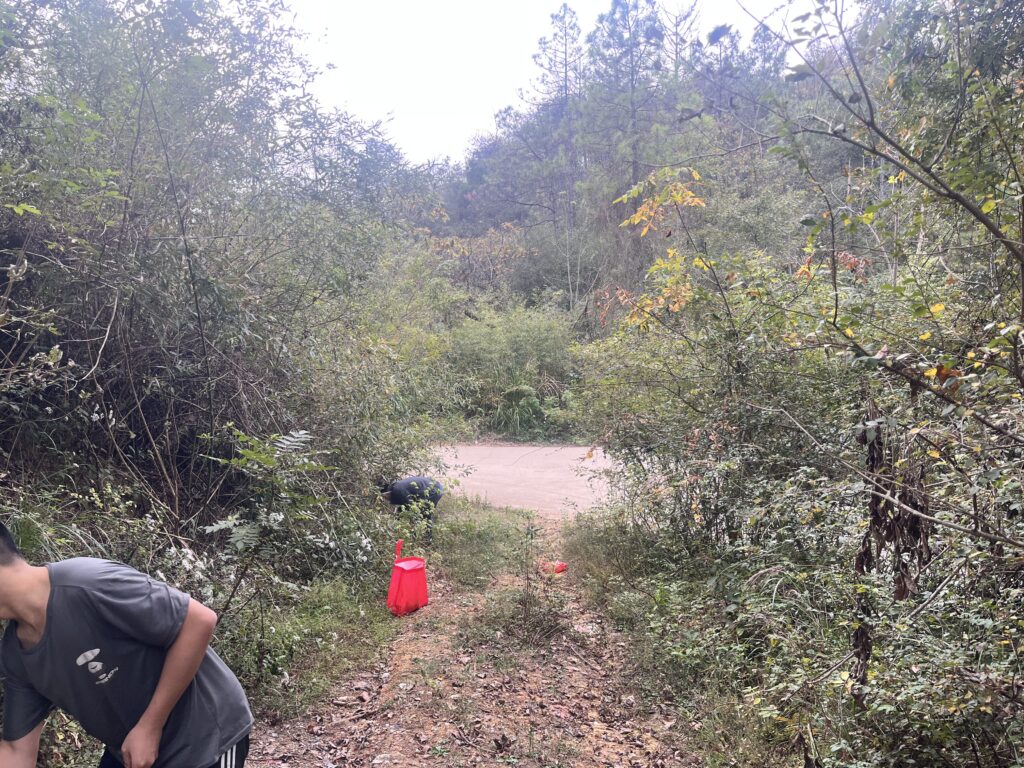
DC: To be honest, we had hoped to include a sufficient number of native ant species in the study. However, collecting enough complete native ant colonies and transporting them intact over long distances back to the laboratory was a challenge. For this reason, only three ant species were included in the study.
MNB: Do you have any tips for others who are interested in doing related research?
DC: For similar research, I recommend strengthening cross-country or cross-regional collaborations, which would make such studies more in-depth, interesting, and representative.
MNB: Where do you see the future for this particular field of ant research?
DC: I believe ant research is both fascinating and challenging. Due to their ubiquity and sociality, many surprising phenomena are likely to be discovered. However, because social insects are so complex, it can be difficult to present a compelling story. Nevertheless, I believe that with rapid advances in relevant technologies and methods, as well as increasingly close collaboration among researchers, this field will shine even more brightly in the future. We also welcome more colleagues to exchange ideas or collaborate with us. We believe that win-win cooperation is the way forward and key to creating more meaningful research.







Recent Comments