
A Ring Species Around the Dinaric Alps? An Interview with Sándor Csősz
Biologists are often only able to observe the end result of the process of speciation by studying clearly separated species, and rarely get the chance to observe speciation as it is ongoing. In their new study “Reconstructed phylogeny and morphometry suggest the European rock ant Temnothorax sordidulus (Müller, 1923) forms a ring species around the Dinaric Alps (Hymenoptera, Formicidae)”, Csősz et al. study populations of the European Temnothorax sordidulus complex along the Dinaric Alps and come to the exciting conclusion that these populations form a ring species, where the two terminal populations are not connected by gene flow despite geographical proximity, and resolve the taxonomic classification of these ants. Here, Sándor Csősz tells us more about science and the motivation behind this study.
Edited by Beatriz Portinha and Salvatore Brunetti


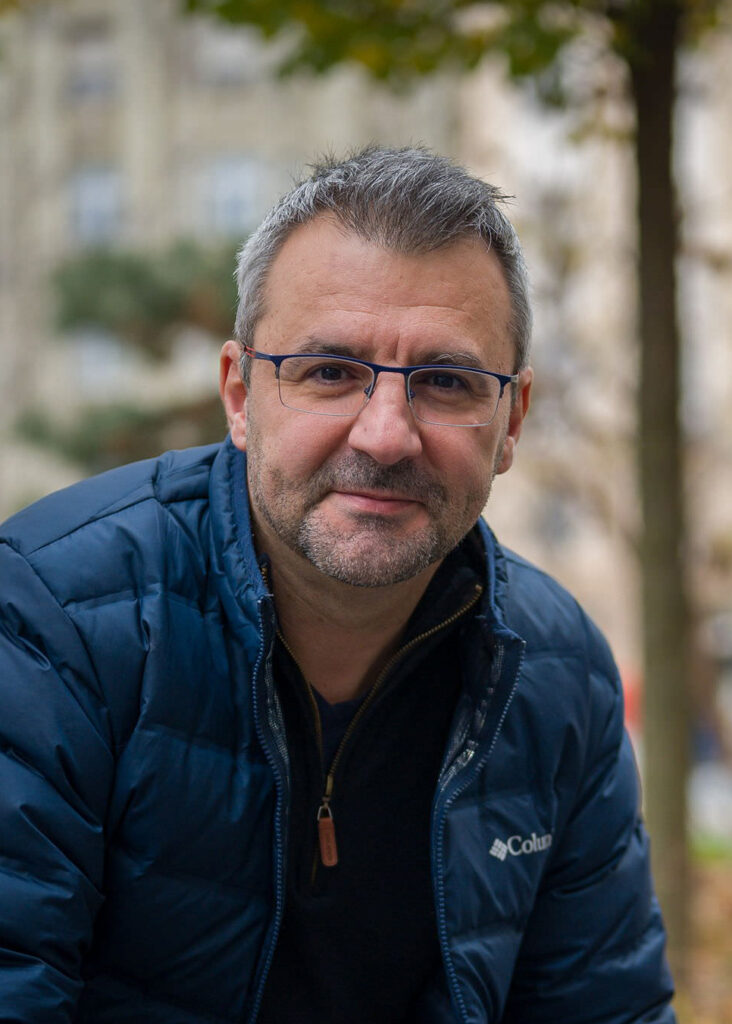
MNB: Could you tell us a bit about yourself?
SC: I am a Hungarian scientist, born and raised in a small border town. I originally imagined myself going into technology or engineering, until one summer in my youth, a Formica colony living in our yard changed everything. I was fascinated watching the workers haul insects bigger than themselves across the ground, and how, as they neared the nest, others would come out to help drag the heavy load inside. This remarkable degree of organization, and the sophisticated communication underlying it — of which I then knew almost nothing — drew me in completely. That was it: I chose biology, and within it, ants.
After my doctorate, I began my professional career as the curator of the Hymenoptera collection at the Hungarian Natural History Museum for nearly a decade. I then spent over two years at the California Academy of Sciences as a postdoctoral fellow. After returning home, I joined the Integrative Ecology Research Group, where I continue to work today.
I think of myself as a taxonomist at heart, though I believe taxonomy, i.e., discovering biodiversity and naming and describing living things, is only truly worthwhile when it is integrated into other disciplines, when the patterns we find can be placed into a bigger picture. So whenever I get the chance, I try to look at things through a wider lens, whether that means asking an evolutionary question or an ecological one.
As a taxonomist, I place heavy emphasis on quantitative work. Large datasets, robust statistics, reproducible results. These matter to me because taxonomic conclusions should rest on solid ground. I want to help push taxonomy toward becoming a more modern, data-driven 21st-century discipline, and I spend a fair amount of effort developing new approaches to morphometric analysis that can make taxonomic decisions faster and better supported.
Beyond taxonomy, my career has taken me into many other corners. One of my favorites is the development of alternative parasitogenic phenotypes, a topic that sits at the crossroads of taxonomy, developmental biology, and parasitology, and that I find endlessly interesting for exactly that reason.
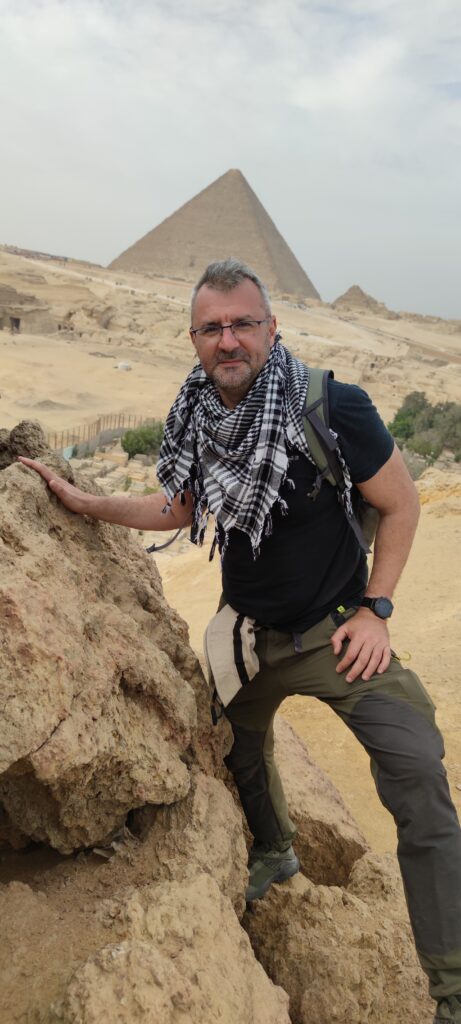
MNB: Could you briefly outline your research on “ Reconstructed phylogeny and morphometry suggest the European rock ant Temnothorax sordidulus (Müller, 1923) forms a ring species around the Dinaric Alps (Hymenoptera, Formicidae)” in layperson’s terms?
SC: Biodiversity research is often treated as being primarily about describing species, but the species concept itself is an artificial construct, something we impose on nature rather than discover in it. Biodiversity is far messier than that, and making sense of it often requires more than just drawing lines between taxa.
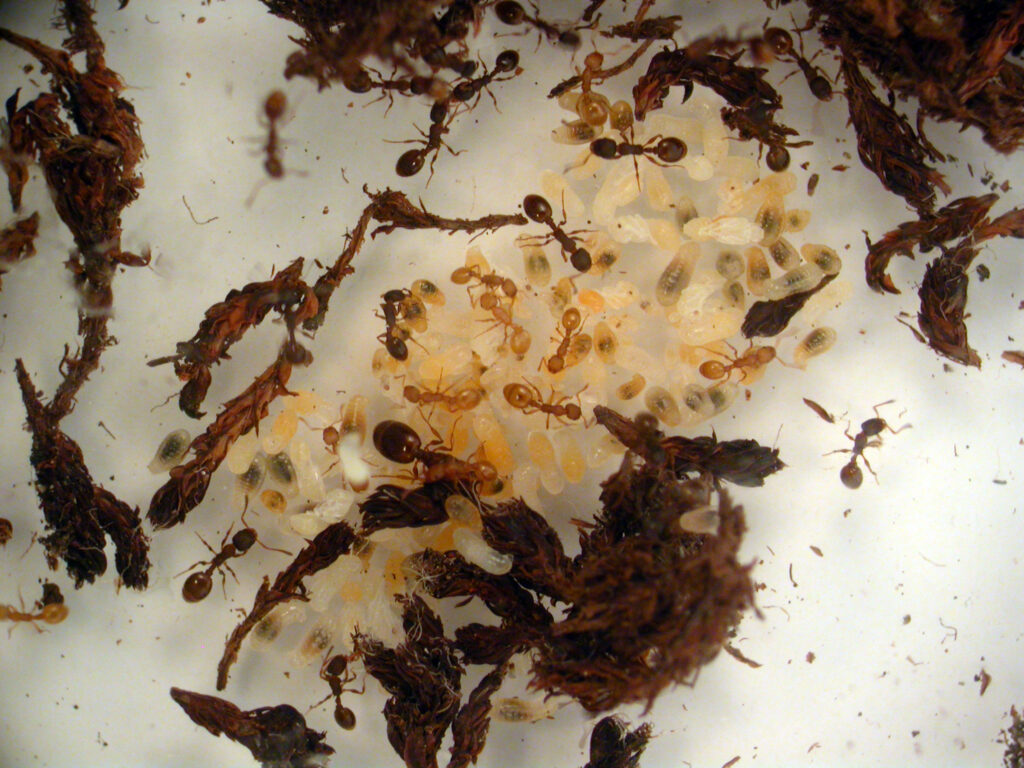
Our work on Temnothorax sordidulus is a good illustration of this. Geographically adjacent populations show only minimal morphological and genetic divergence, yet that divergence is real and consistent; it just never crystallizes into anything we could honestly call a species boundary. What we see instead is a cline running from Greece to Central Europe, which, as populations wrap around the Dinaric Alps, curves southward and then eastward to close back on itself, forming a ring species. Neighboring populations along this ring are connected by gene flow and morphological continuity, but the two ends of the chain, the terminal populations, have no such connection with each other. To our knowledge, this is the first documented case of a ring species in ants.
For taxonomists, this kind of pattern is genuinely uncomfortable. It raises the question of how we apply a species concept built around discrete boundaries to something that is, in reality, a continuum – yet the terminal populations meet our species standards.
MNB: What is the take-home message of your work?
SC: Taxonomy has long been about finding clean answers: what is a species and what is not, where one species ends and another begins. But nature doesn’t work that way. To borrow Carl Sagan’s words, “the world is not made for us.” Our job isn’t to force patterns into categories; it’s rather to understand the patterns on their own terms, even when they are uncomfortable or don’t fit neatly into our existing framework. If this work nudges a few taxonomists to ask harder questions rather than settle for convenient answers, I’d consider that a success.
MNB: What was your motivation for this study?
SC: Back in 2015, when we introduced taxonomic changes to the T. sordidulus species complex (Csősz et al. 2015), Bernhard Seifert reached out to say his own analyses had brought him to a different conclusion. We exchanged datasets (collected under very similar protocols) and satisfied ourselves that both were methodologically sound, yet we were drawing species boundaries in different places. It was clear that something very puzzling, something more complex, was going on, and we agreed to resolve it together when the chance came. At that point, we suspected hybrid zones were behind the turbulence; a ring species scenario hadn’t crossed our minds.
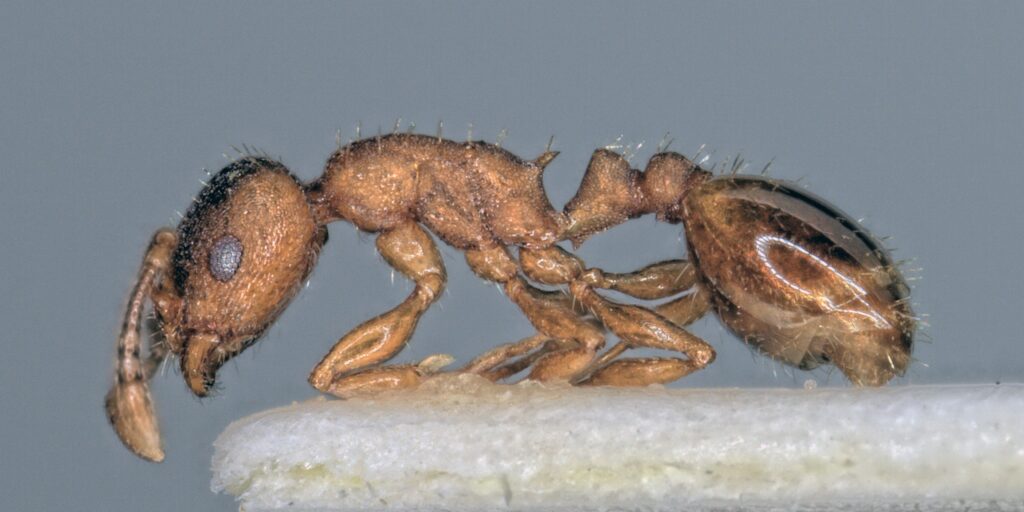
MNB: What was the biggest obstacle you had to overcome in this project?
SC: In taxonomic work, the hardest part is almost always gathering the material. Even coverage across a target region is rarely achievable in practice. In our case, we would have liked to include specimens from Montenegro and Albania. This is because having more samples from a blank area might have enabled us to get an even better resolution picture, but they were simply not available to us, this time.
MNB: Do you have any tips for others who are interested in doing related research?
SC: If we are talking about taxonomy or systematics in a broader sense, I would place emphasis on methodological knowledge. In modern times we have gone through such methodological and technological advances that allow us to understand biodiversity with much greater precision and resolution. Get comfortable with statistics and data analysis, there is really no way around it in modern taxonomy. Beyond that, I would strongly encourage learning morphometric methods, which have become indispensable tools for making taxonomic work more rigorous and reproducible. It is also strongly advisable to collaborate across disciplines. One of the most exciting developments right now is the rapid rise of AI in taxonomy. For those open to it, this opens up possibilities that would have been unthinkable just a few years ago.
MNB: Where do you see the future for this particular field of ant research?
SC: I think the time has come to reinterpret the primary goals of taxonomy. In poorly explored regions there is still good reason to push for new species descriptions, but we should be honest with ourselves that this is increasingly a by-product of the work rather than its purpose. What taxonomy should really move toward is a deeper understanding of evolutionary patterns, and that requires bringing molecular and morphological data together in a meaningful way.






Recent Comments