Cuticular hydrocarbons and colony-level foraging behaviour in desert ants
As climate change accelerates, it becomes more and more important to understand how environmental stress affects physiological traits and behavioural responses. In the paper “Cuticular hydrocarbons and collective response to water stress in a desert ant”, Florian Menzel et al. examined desert ants (Pogonomyrmex barbatus), where colonies differ in how they collectively regulate foraging during dry conditions to reduce water loss. Some colonies are risk-averse, reducing foraging when conditions are dry, while others are risk-tolerant and continue foraging. Here, Florian answers questions about his recent work.
An Interview compiled by Beatriz Portinha and Patrick Krapf

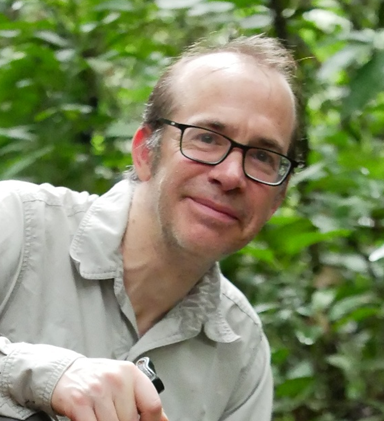
MNB: Could you tell us a bit about yourself?
FM: I am an ant researcher interested in evolutionary ecology. What fascinates me is the diversity of species that is out there – how and why did they evolve, and how can they coexist? Which traits enable them to cope with their environment and to avoid competition? My favourite research subject is ants (of course (-: ) – they are so amazingly diverse, and their social organisation is stunning. I work in Central Europe a lot, but love to do studies in the tropical rainforest. The tropical rainforest is awe-inspiring, and serves as habitat to so many species – and yet, it is so endangered.
In the past years, cuticular hydrocarbons (CHCs) have been the focus of my research – a super-thin layer of lipids on the body surface of insects (probably not more than around 30 molecules thick!), and yet so important to their life, with lots of different functions, including communication, protection against water loss, foot adhesion, and fending off pathogens. I study how CHCs evolve, how insects change their composition if the current climate requires it, which physical properties they have, and how they influence survival and direct or indirect interactions with other species. It is surprising how changes in one trait (like CHCs) can lead to changes in others (like foraging activity, movement decisions or aggression between two individuals). Next to biology, I love travelling, jazz music, dancing, and spending time with my family.
MNB: Could you briefly outline the research you recently published in layperson’s terms?
FM: The harvester ant (Pogonomyrmex barbatus) lives in the deserts and semi-deserts of the Southwestern USA. Like all desert animals, they lose water to evaporation while out foraging. They get water from the seeds they eat, found during foraging. Thus, they must spend water to obtain water and food. Colonies of this species differ in how they manage this trade-off: in some colonies (‘risk-averse’ colonies), foragers avoid the risk of water loss by making fewer trips on very hot and dry days, when they would lose the most water. In others (‘risk-tolerant’ colonies), foragers are more likely to take that risk and go out to forage even if it’s hot and dry.
In this study, we found that foraging workers of risk-averse colonies are more prone to water loss than those of risk-tolerant colonies, because their CHC layers have a slightly different chemical composition (they have more alkenes) and are, therefore, less effective against water loss. These intraspecific CHC differences are linked to differences in the moment-to-moment decisions of foragers on whether to leave the nest on another trip. These individual decisions add up to differences among colonies in how they regulate foraging activity to look for food but lose as little water as possible, leading to “risk-averse” and “risk-tolerant” colonies. I found it fascinating how individual decisions can be based on individual CHC profiles, but scale up to colony-level differences.
MNB: What is the take-home message of your work?
FM: In short, it is that small differences in CHC composition can lead to predictable differences in how much water the ant loses, and this affects the behavioural decisions it takes: Should I stay (home) or should I go (get some food)? With studies like this, we can dig deeper into understanding how one trait influences another, and how traits shape the ecology of a species, or even how intraspecific trait variation leads to intraspecific variation in climate niche and (possibly) competitive ability.
MNB: What was your motivation for this study?
FM: For a long time,I have been interested in trait-based ecology, and tried to uncover how chemical and behavioural traits can be linked to a species’ ecological niche or the way it interacts with other species. One day, Deborah Gordon from Stanford University (California) contacted me and asked me whether I’d be interested in collaborating on CHC profiles in harvester ants. Deborah has been studying foraging behaviour in harvester ants for more than 30 years. Therefore, she has an amazing long-term dataset now. In her study site, she knows the age of each colony, and for many colonies she has data from multiple years on how they change foraging behaviour in response to weather conditions. This huge dataset now allows for insights into long-term foraging strategies of different colonies.
MNB: What was the biggest obstacle you had to overcome in this project?
FM: The biggest obstacle is, unfortunately, anthropogenic change. Due to climate change, the Southwest of the US is getting drier and drier. This is a problem even for desert-dwelling ants, because they need the (short) rainy season (monsoon), when everything flowers and there are seeds for a short period of time. This monsoon has been almost absent for two years now, and more and more colonies suddenly die although they seemed perfectly healthy only few months earlier.
MNB: Do you have any tips for others who are interested in doing related research?
FM: Find a research group that does what you are interested in. Think not only about the species (or taxon) you like (although this matters as well, of course), but also about the biological questions that fascinate you. And then go ahead and contact researchers in that field – most of them will be happy to collaborate or to exchange ideas.
MNB: Where do you see the future for this particular field of ant research?
FM: My hope is to better understand how different traits interact and influence each other. How does chemical composition of CHC layers affect their physical properties, and how does this affect ecophysiological traits or the interactions with other species? Next, we should try to disentangle trait variation that is due to plasticity and variation that is due to genetic differences – and how the ability to be plastic is encoded genetically. Once we understand that, we are much closer to understanding how traits evolve and how species can adapt to changing conditions.







Recent Comments