On the internet, searching for ants leads to new paths to engage with science
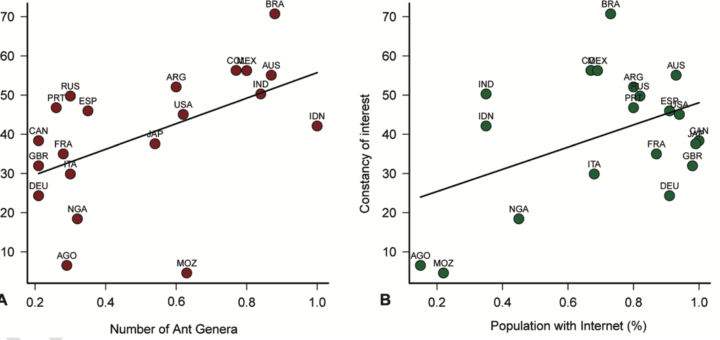
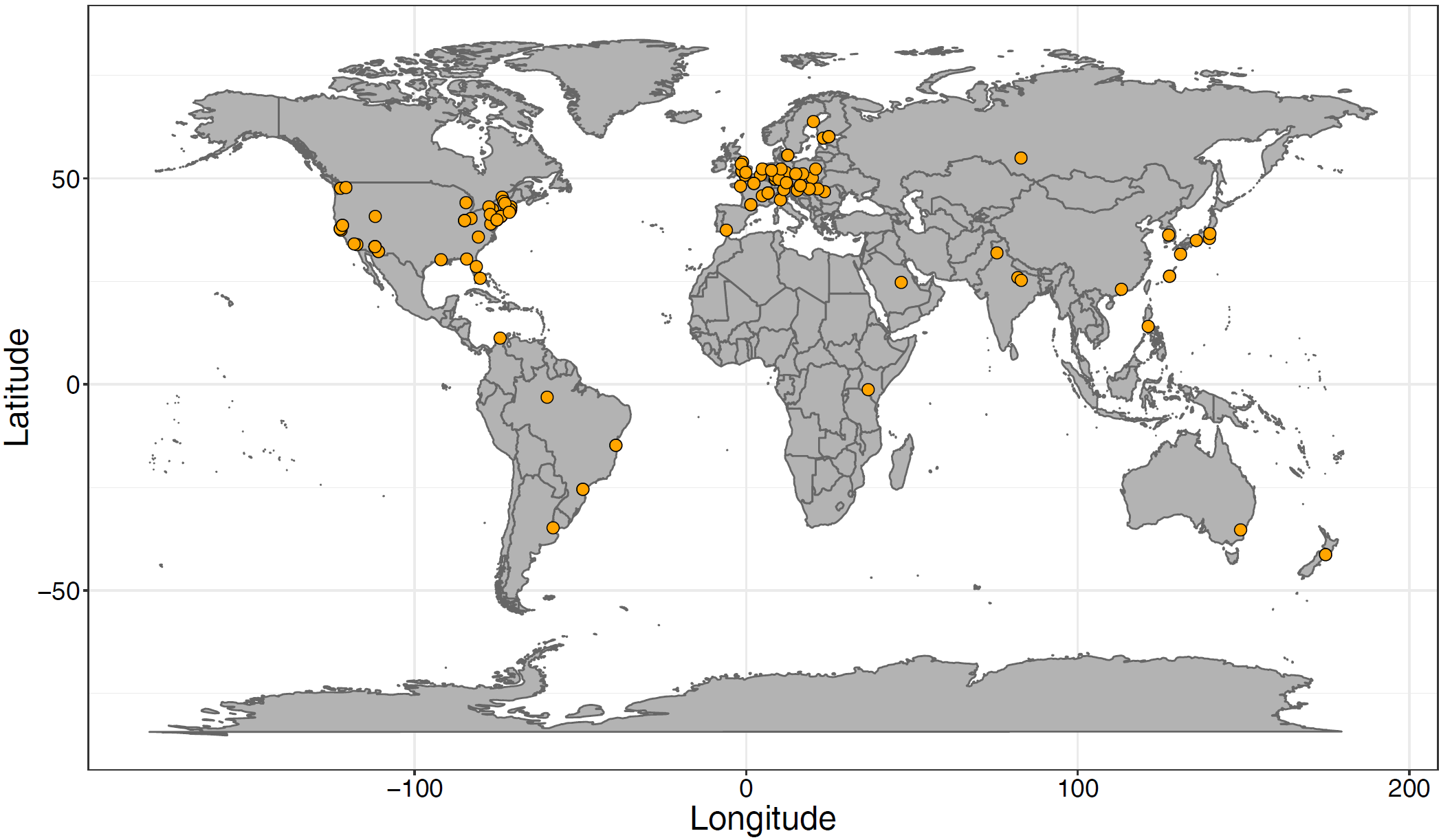
In the recent paper “No matter where you are, Ants (Hymenoptera: Formicidae) get attention when it is warm” published in Myrmecological News, Queiroz et al....
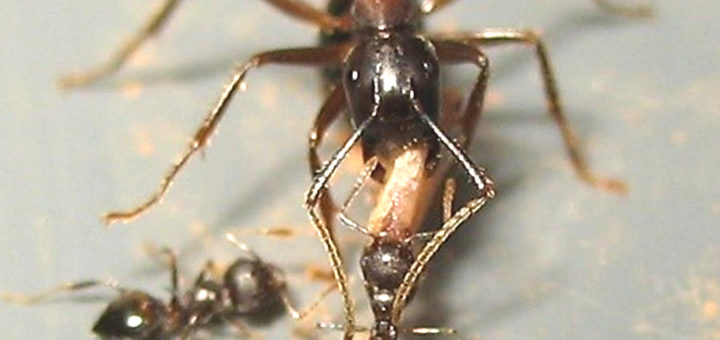
Many insects coat their body surfaces with cuticular hydrocarbons (alkanes, alkenes, etc. with various chain lengths), which act as desiccation resistance and communication tool. Florian...
The year 2020 marked the centenary of the birth of the German-Brazilian myrmecologist, Dr. Frei Walter Wolfgang Franz Kempf, O.F.M., (1920-1976), whose remarkable research contributed...
Philip Bunting 2020, Scholastic Australia, 32 pages, ISBN 9781743834084Published in Dutch by Uitgeverij Condor as ‘De wereldse wijsheid van de mier’Published in English by Scholastic...
Natalia de Souza Araujo is a postdoc at the Université Libre de Bruxelles, where she uses bioinformatics and molecular biology to answer exciting evolutionary questions....
Myrmecological News Blog and its editorial team celebrate the end of this very difficult year 2020 with a Top 10 Blog Posts Special and use...
Kronauer D. 2020 Army Ants: Nature’s Ultimate Social Hunters. – Harvard University Press, Cambridge, Massachusetts, USA, 384 pp; ISBN 978-0674241558, EU € 58.50 A Book...
In the review article by Baty et al. (2020) “Viruses and their effects in ants (Hymenoptera: Formicidae)” published in Myrmecological News, the authors conduct a...
In the recently published article “Origin and elaboration of a major evolutionary transition in individuality” in Nature, A. Matteen Rafiqi, Arjuna Rajakumar, and Ehab Abouheif...
In the recent paper “Myrmecology, Gender, and Geography: changing demographics of a research community over thirty years” published in Myrmecological News, Andrea Lucky and colleagues...
Recent Comments