
Chromosomes and cryptic species: Revealing hidden diversity in Strumigenys ants
Understanding species boundaries is one of the central challenges in modern taxonomy, particularly in groups containing morphologically similar species. In their study on Neotropical Strumigenys ants, Gabriela de Figueiredo Jacintho and colleagues combine cytogenetics and morphology to uncover hidden diversity within the Strumigenys louisianae-group. By examining chromosome number and structure, the authors demonstrate how cytogenetic data can help resolve cryptic species and clarify taxonomic relationships.
Edited by Purbayan Ghosh and Salvatore Brunetti



MNB: Could you tell us a bit about yourself?
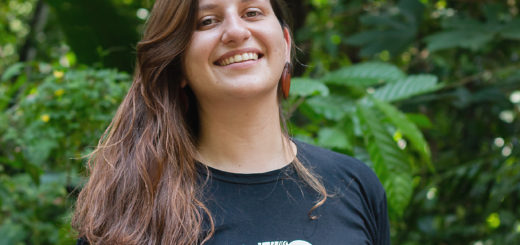
GJ: I am a Brazilian PhD student. I completed my undergraduate degree and master’s at the Universidade Federal de Viçosa (UFV), and I am now pursuing my doctoral research there as well, with both my master’s and PhD in Entomology.
I have been working with ants since the very beginning of my academic career. My first contact with them dates back to 2016, during my undergraduate studies, when I started working with the UFV ant collection, the Coleção Entomológica do Laboratório de Coleoptera (CELC). At that time, I was unofficially advised by Júlio Chaul and helped with databasing, imaging, specimen processing, and making CELC material available on AntWeb.
CELC was the first Brazilian ant collection to make its data available on AntWeb and is currently the most active ant collection in the country on the platform, with the highest number of records and images. Contributing to this effort has always felt very meaningful to me. Myrmecologists are particularly fortunate to have resources such as AntWeb, AntCat, and AntWiki, and I continue to contribute to these databases voluntarily to this day.
Because there are no permanent professors at UFV working specifically on ant taxonomy, which is my main interest, I began my master’s research in ant cytogenetics, supervised by José Eduardo Serrão and co-supervised by Luísa Barros and Denilce Lopes, with important unofficial guidance from Júlio Chaul and Gisele Teixeira. Cytogenetics turned out to be a valuable source of data for addressing taxonomic questions, and the main results of my master’s research have now been published.
Now, as a PhD student, I felt ready to take on a full taxonomic revision. I have moved away from cytogenetics and am currently working with UCE-based phylogenomics, combining genomic data and morphology to investigate species limits and relationships within the Strumigenys gundlachi-group. I am still advised by José Eduardo Serrão.
I find it difficult to separate who I am from what I work on. At heart, I am simply someone who enjoys looking at ants, learning, and collaborating to expand our knowledge of this fascinating group. I still remember reading major taxonomic and phylogenomic papers as an undergraduate student and seeing the authors as rock stars, while wondering when I might one day publish in Myrmecological News — honestly, without forcing anything. It is very rewarding to see things coming together now.
MNB: Could you briefly outline your research on “Cytogenetic studies on two Neotropical groups of Strumigenys SMITH, 1860 (Formicidae: Myrmicinae), with taxonomic implications for the Strumigenys louisianae-group” in layperson’s terms?
GJ: Our study has two main goals. First, we describe and compare the chromosomes of different Strumigenys ant species. Second, we show how chromosome data can help clarify species boundaries, especially in groups where species look very similar to one another.
Cytogenetics is the study of chromosomes — the tiny X-shaped structures made of DNA and proteins that carry genetic information. In ants, we obtain this information by collecting colonies and examining larvae at a specific developmental stage (the post meconium eliminatium phase, when chromosomes are most visible). From the cerebral ganglia of these larvae, we prepare microscope slides that allow us to observe the number and shape of chromosomes and even label specific DNA regions. Together, this set of characteristics is called a karyotype.
By comparing karyotypes, we can identify patterns that help us understand how chromosomes evolved within a species group and, importantly, gain new characters that are useful for taxonomy. This is particularly valuable when dealing with cryptic species — those that are very similar in external morphology.
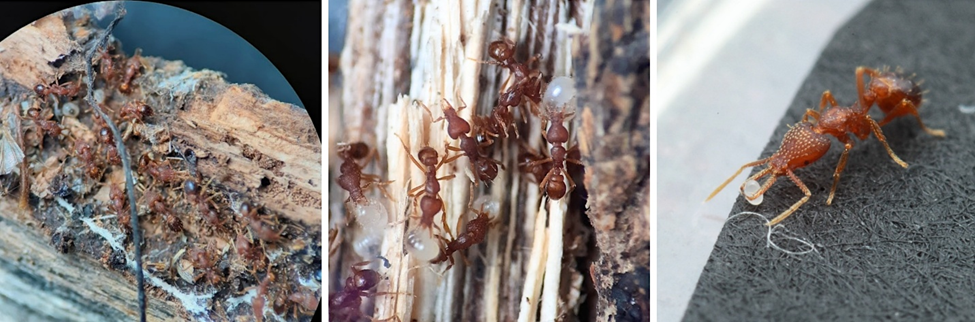
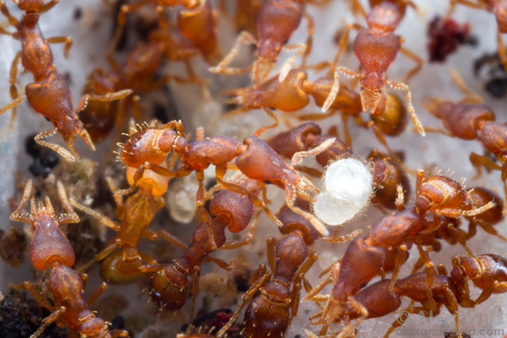
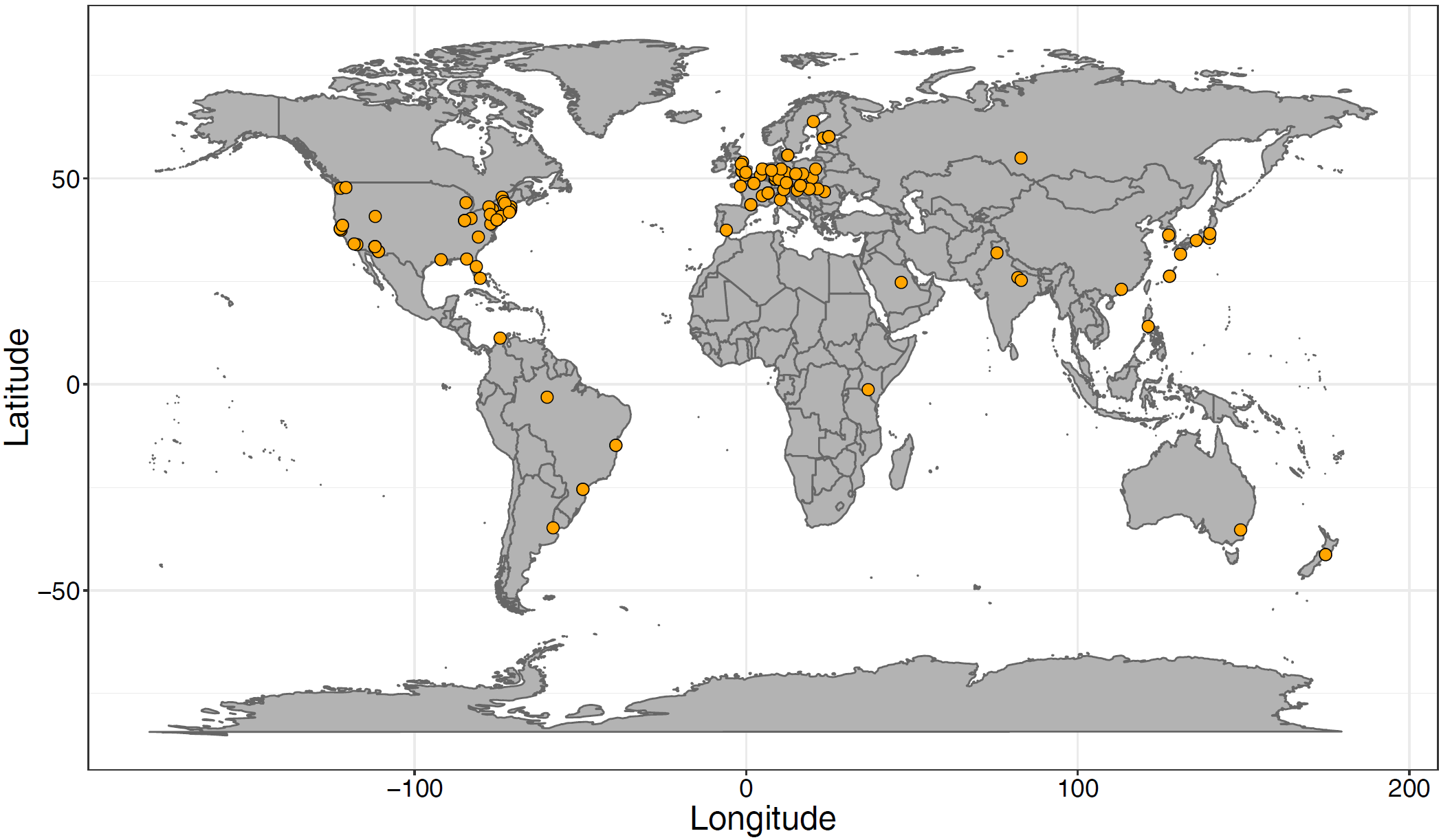
In the taxonomic part of our study, we focused on three tiny Neotropical trap-jaw ants that were previously all considered a single species, Strumigenys louisianae. These ants are small, morphologically similar, and widely distributed, which makes species boundaries difficult to recognize using morphology alone. By combining cytogenetic data with careful morphological analysis, we were able to distinguish these lineages, leading to the description of Strumigenys mineira and the reinstatement of Strumigenys clasmospongia as a valid species.
MNB: What is the take-home message of your work?
GJ: The main take-home message is twofold. First, cytogenetics is a powerful and relatively accessible tool that can greatly support taxonomic research, especially in groups with cryptic species. Second, the more we study Strumigenys, the clearer it becomes how much taxonomic work still lies ahead.
MNB: What was your motivation for this study?
GJ: At the beginning, my main motivation was simply to find colonies and include as many species as possible in the study. As the work progressed and I began to see the first karyotypes, it became clear how much information the technique could provide. At that point, my motivation shifted from simply increasing the sample size to extracting as much biological and taxonomic information as possible from the material I already had. As a result, the study gradually evolved from being purely cytogenetic into a broader taxonomic investigation.
MNB: What was the biggest obstacle you had to overcome in this project?
GJ: When I started this project, I had no prior experience with cytogenetics, so learning both the techniques and the theory was by far the biggest challenge. Beyond that, there were many practical obstacles along the way. Sometimes colonies were difficult to find, and even when they were collected, they did not always contain enough larvae — or larvae at the correct developmental stage. In other cases, colonies did not survive long enough in the laboratory for larvae to develop.
Cytogenetic work itself is also prone to failure — and in my case, quite often. Sometimes metaphases simply did not appear; in other cases, chromosomes were incomplete or of poor quality. When applying techniques such as fluorescent in situ hybridization (FISH), hybridization could fail entirely, occasionally degrading all the material on a slide. The project ultimately became a long and intense learning process.

MNB: Do you have any tips for others who are interested in doing related research?
GJ: My main advice is simply to get started. There are many ant species, genera, and even entire subfamilies that have never been studied cytogenetically, so there is still a great deal to discover.
Another important point is to invest time in sampling colonies. At first, finding them can be challenging, but with experience it becomes much easier, and you begin to recognize where and how to find them. Working with whole colonies opens up a wide range of possibilities: learning about natural history, accessing males and larvae that are often overlooked in taxonomic studies, and integrating multiple types of data, including karyotypes, DNA, and morphology.
Finally, it is important to keep in mind that things will fail — sometimes repeatedly. Persistence is a crucial part of this kind of research.
MNB: Where do you see the future for this particular field of ant research?
GJ:There is still much to be done in both cytogenetics and taxonomy. Many ant groups remain poorly explored from a chromosomal perspective, and taxonomic questions are far from fully resolved. Fortunately, Brazil is a major hotspot for myrmecological research, with a growing community of researchers working in both areas. I am optimistic that this will lead to increasingly robust understanding of Brazilian ant species boundaries and to a deeper understanding of their evolutionary history.







Recent Comments