
‘Hell Ant’ fossil unearthed in museum collection becomes the oldest known ant specimen
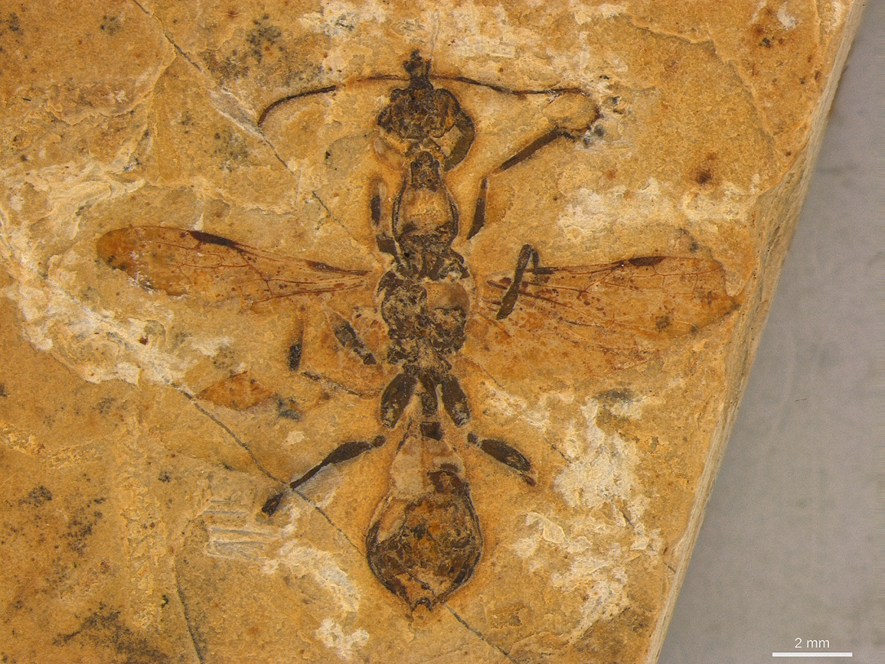
In their article, “A hell ant from the Lower Cretaceous of Brazil” the authors report the oldest known Haidomyrmecinae, preserved as a rock impression in limestone of the Crato Konservat-Lagerstätte in northeastern Brazil.
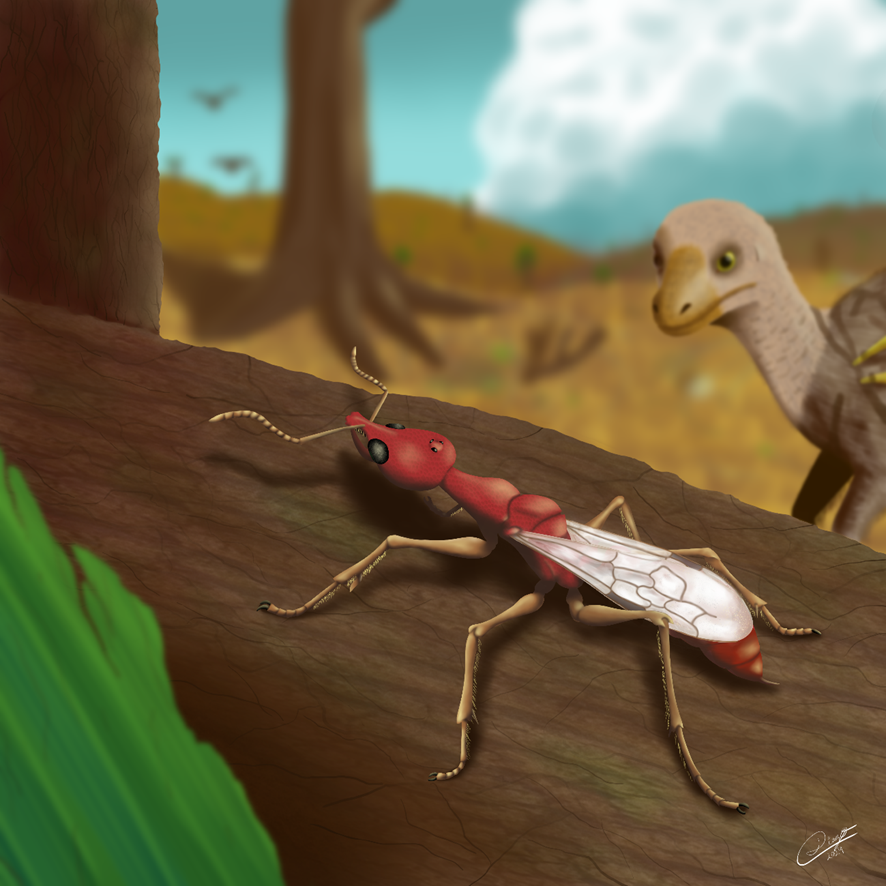
A fossilized ant, overlooked for years in a Brazilian museum collection, has turned out to be the oldest known ant. The 113-million-year-old fossil, recently described as a new species named Vulcanidris cratensis, was discovered in a collection of limestone originating from the Crato Formation in northeastern Brazil.
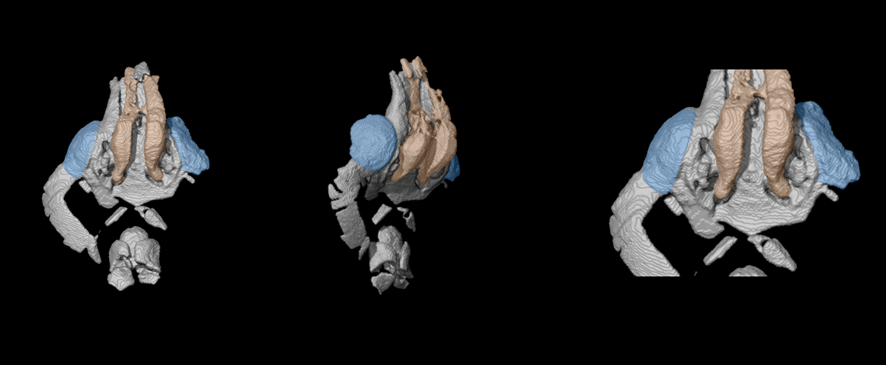
This ant belongs to the enigmatic hell ants, the now-extinct Haidomyrmecinae subfamily, characterized by upward moving trap-like mandibles, likely used to impale prey. While previous hell ant fossils have been found encased in amber, this is the first preserved in rock, offering a rare and valuable insight into early ant evolution.
The fossil’s well-preserved features suggest that complex predatory adaptations in ants emerged far earlier than previously thought. Its discovery not only pushes back the known origins of ants but also underscores their early ecological diversity and widespread distribution during the Cretaceous period.
In this blog contribution, Anderson Lepeco shares some pictures about this interesting fossil ant.
Edit by Elia Guariento and Salvatore Brunetti

MNB: Could you briefly outline the research in layperson’s terms?
AL: We have found a fossil of an ant that is older than any other fossilized ant ever discovered. This ant species lived in northeastern Brazil during the Cretaceous period, alongside dinosaurs and pterosaurs. Its head exhibited unusual structures, with jaws that moved up and down. This feature places this ant among the remarkable “hell ants”, which have also been found as fossils in Myanmar, France, and Canada. These findings suggest that ants exhibited specialized behaviours and spread throughout the globe relatively early in their evolutionary history.
MNB: What is the take-home message of your work?
AL: Biological collections harbour many interesting findings waiting to be discovered. These collections can provide valuable information and have the potential to redesign Earth’s history and close gaps in our knowledge about living things. However, scientists need access to this valuable source of information, preferably in museums and universities, where proper care and access is provided.






Recent Comments